Become a Crash Support Hotline operator

Do you care about your fellow cyclists and pedestrians? Do you want an opportunity to genuinely help another person? Can you answer a phone?

If you said yes to the questions above--we want you!

The Active Transportation Alliance Crash Support Hotline is ringing and we are training volunteers to answer the phone. This is a unique opportunity to become an expert on assisting cyclists and pedestrians after a crash.

Volunteers undergo an extensive training that will give them the tools and confidence they need to effectively answer the Crash Support Hotline. Volunteers will sign up for a two week time slot to take calls. During their scheduled time, volunteers will be issued a crash support cell phone and will be expected to return all crash calls within 24 hours.

Training dates (both dates mandatory)

Part 1: Legal, Logistics and Crisis Training
February 12
6:30-8 p.m.
9 West Hubbard, Suite 402
Chicago, IL 60654

Part 2: Answering the Hotline
February 21
6:30-8 p.m.
9 West Hubbard, Suite 402
Chicago, IL 60654

To be a volunteer, you must attend a two part mandatory training. Please RSVP to jason@activetrans.org with your name, phone number and email address.

For more information on the Active Trans Crash Support Hotline, please visit http://www.activetrans.org/crashsupport/hotline, or call 312.427.3325 x238.

Feb. 25 Riders for Better Transit Summit: Building a 21st Century Transit System

What is Chicagoland's vision for better transit in the years to come, and how will we get there?

Join Riders for Better Transit for a summit on Building a 21st Century Transit System: a discussion of public transportation’s future, funding and governance in Chicagoland. 

February 25, 2013
8:30 a.m. to 12 p.m.
UBS Tower Conference Center, 1 N. Wacker Dr., Chicago, IL
Registration: $25, or $15 for Active Transportation Alliance members/donors. Includes continental breakfast with coffee.

Click here to REGISTER NOW!

We’re bringing together civic and public sector leaders in transportation to help answer tough questions about the challenges of providing a world-class transit system, including:

Governance Matters: Chicagoland transit service is managed by four different agencies with 47 board members appointed by elected officials in different levels of government. What’s working, what isn’t, and how can we improve the system? Find out in this panel moderated by Steve Schlickman, executive director of the UIC Urban Transportation Center, and featuring panelists Frank Beal, executive director of Metropolis Strategies; Dan Cronin, chairman of DuPage County; and John Gates, chairman of the RTA.

Funding Matters: Creating a world-class transit system will require increasing investment in transit, but where will the money come from? Learn about the barriers and the options for funding in this panel moderated by Jon Hilkevitch of the Chicago Tribune, and featuring panelists Randy Blankenhorn, executive director of the Chicago Metropolitan Agency for Planning; Kevin DeGood, deputy policy director of Transportation for America; and Peter Skosey, vice president of the Metropolitan Planning Council.

Also featuring: Presentations by noted urban policy expert and commentator Carol Coletta and Scott Bernstein, president of the Center for Neighborhood Technology.

Visit www.activetrans.org/TransitSummit2013 for the latest summit information!

See thousands of people riding Lake Shore Drive wearing your T-shirt design!

Got an idea for an MB Financial Bank Bike the Drive T-shirt? If so, now’s your chance to show off your graphic design chops.

Active Trans is launching its first T-shirt design contest for MB Financial Bank Bike the Drive—that classic Chicago biking event on May 26 that closes Lake Shore Drive to vehicles and opens it to many thousands of people biking.

Up to five finalists will win two free registrations to the event. The final winner will have his or T-shirt design adorning 20,000 participants at the event.

T-shirt design submissions are due February 20. Active Trans will choose a few of the best designs, and then open the final decision to an online vote.

Join the fun. It’s a great opportunity if you’re a graphic designer, or if you’re just someone who happens to know your vectors from your rasters. Check out the event website for more information about the contest.

And if you haven’t registered for MB Financial Bank Bike the Drive, you can save big by registering by February 1, and save a little more by visiting an MB Financial Bank location.

Seeing the world as a straphanger

While researching his new book, Straphanger: Saving Our Cities and Ourselves from the Automobile, travel writer Taras Grescoe visited cities all over the world to deliver the story on the world's great transit systems.

On a journey that takes him to New York, Moscow, Paris, Copenhagen, Tokyo, Bogotá, Phoenix, Portland, Vancouver, and Philadelphia, Grescoe goes beneath the streets to see subway tunnels being dug, he boards state-of-the-art streetcars and he hops on high-speed trains — along the way uncovering ideas that will help undo the damage a century of car-centric planning has done to our cities.

The book provides a history of each city's mass transit, and describes how each is meeting (or not meeting) its goal of moving people quickly, conveniently and affordably.

Active Trans volunteer contributor Jason Phillip recently had a chat with Grescoe about the book and how some lessons he learned could be applied to the Chicago region.

Jason Phillip: You've traveled the world investigating transportation systems in dozens of cities. What are you most excited about in terms of new thinking about transit and new ways of getting ourselves around—especially those ideas with practical implications for U.S. cities?

Taras Grescoe: The latest additions to major metropolitan transit systems in European cities, including London, Paris, and Madrid, include serious subway/metro systems for the suburbs—not just commuter trains taking people from home to work, but metros for the outskirts. That’s going to make those suburbs denser and more walkable.

We need to find a transit solution for the North American suburbs—metros are incredibly expensive to build and operate, so a bus rapid transit system might be a smarter way to go.

Can you talk about what makes for a successful bus rapid transit system? After your travels in Bogotá, Colombia, do you have any words of advice as BRT is introduced in Chicago?

I generally dislike the experience of riding most buses, but only because they become second-class vehicles on our roads, inevitably the slowest thing in traffic. In true bus rapid transit systems, they are often the fastest things on the road—and often much faster than cars in really crowded developing world metropolises. The best advice to a city regarding BRT is not to implement it in a half-hearted way.

Dario Hidalgo, who helped set up Bogotá’s BRT, makes the case that a BRT system that doesn’t include pre-payment, separated rights-of-way, real stations (preferably with platform doors and level boarding), strong GPS-supported dispatching, and good branding isn’t a true BRT system. If you introduce BRT with only some of these features, it’s likely to fail—and tarnish the whole idea in the eyes of the public.

Do you think international travel is necessary for people to understand the different ways that urban transit systems can operate?

It really does help to see how transportation works in different places. I think if it hadn’t been for my travels, I wouldn’t have picked up a deep understanding of the relationship between urban structure and density and the kinds of transport systems that fit best with them.

With that said, you can do a lot of travel on the Internet these days: Almost every major transit system can be seen in action on YouTube, for example, and with Google maps you can see how stations and routes fit into cities.

What do you think Americans would find most surprising about the history of urban transportation in their own country?

I think everybody who lives in North America, which is now so car dependent, has to be reminded how this continent was built by trains, and how its cities grew with rail transit. By the 1920s, virtually every town and city with a population of over 10,000 had its own streetcar system. The network of streetcars and interurbans was eventually so dense that you could hop interlinked streetcars from Waterville, Maine to Sheboygan, Wisconsin—a journey of 1,000 miles, exclusively by electric trolley.

Los Angeles, which everybody thinks is the quintessential automobile metropolis, owes its dispersed urban form to the Pacific Electric network. That’s why I think a transit and walkability revival is going to be most successful in those pre-WWII neighborhoods that were originally built for streetcars and buses (rather than the off-ramp-dependent post-war subdivisions).

What would it take to bring intercity passenger rail service in the U.S. up to par (or at least not embarrassing levels) compared with Europe? Is this is a more desirable goal than improving transit within cities?

    Taras Grescoe; photo by Erin Churchill

The two go hand-in-hand. You can’t expect people to reduce car dependency if they can’t do some intercity travel without a car—preferably by rail. I think the U.S. needs to focus its energy on seriously improving and upgrading passenger rail service and speeds between major population centers that are currently linked by plane. That means fast rail up and down the west and east coasts (and linking to Vancouver, Toronto, and Montreal!) and the major cities of the Midwest.

Most people won’t consider a seven- or eight-hour train trip if they can do the same thing by plane in under two. But four or five hours is the sweet spot—because with fast rail, you travel from downtown-to-downtown, and eliminate all the hassles of plane travel.

Can you describe why reducing people's dependence on automobiles can raise their quality of life, even if they don't expect it will?

For many people, losing the use of a car can feel like a loss of independence (or even a regression to childhood!). In many parts of North America, it actually is: The logic of sprawl means that navigating much of suburbia without an automobile is a painful and frustrating experience.

But in cities that have functional public transport, and have bikeable and walkable neighborhoods, getting by without a car can actually bring about positive changes in your life. The health benefits are the obvious benefits: Every transit trip begins and ends with a walk (a study of streetcar users in Charlotte, North Carolina, found that after only half a year they weighed 6.5 pounds less than drivers).

I know that commuting by bike year-round has seriously improved my attitude during the long winter months where I live, in snowy Montreal. There is a more subtle case to be made that, while urban highways and people zipping around in cars tend to foster alienation, bike paths, sidewalks, and public transport (bus stops, subway platforms, the vehicles themselves) add to public space—the kind of space where happy, coherent communities get built.

This article was provided by volunteer contributor Jason Phillip. Phillip is a freelance editor and writer who lives in Chicago.

Wheeling adopts plan for improving walking, biking and access to transit


Congratulations to the Village of Wheeling for adopting an active transportation plan!

Nearly 250 people from the north suburban community helped shape the plan: Local residents, business owners, elected officials, and representatives from the schools, park districts, bike clubs and community organizations all provided valuable feedback. 

The plan contains guidance on where improvements for walking and biking are most needed, what types of improvements to make, policies to encourage coordinated planning of future bike and pedestrian facilities, maintenance plans for existing facilities, and programming ideas for encouraging people to walk and ride in Wheeling. It's all there!

Active Trans was pleased by the amount of enthusiasm within Wheeling for the plan. Already, members of the village board have discussed moving ahead with some of the plan's recommendations.

The recently-adopted plan was a year-long project lead by the Active Transportation Alliance in partnership with the Village of Wheeling, with support from TranSystems, a transportation design and engineering firm, and the Chicago Metropolitan Agency for Planning.

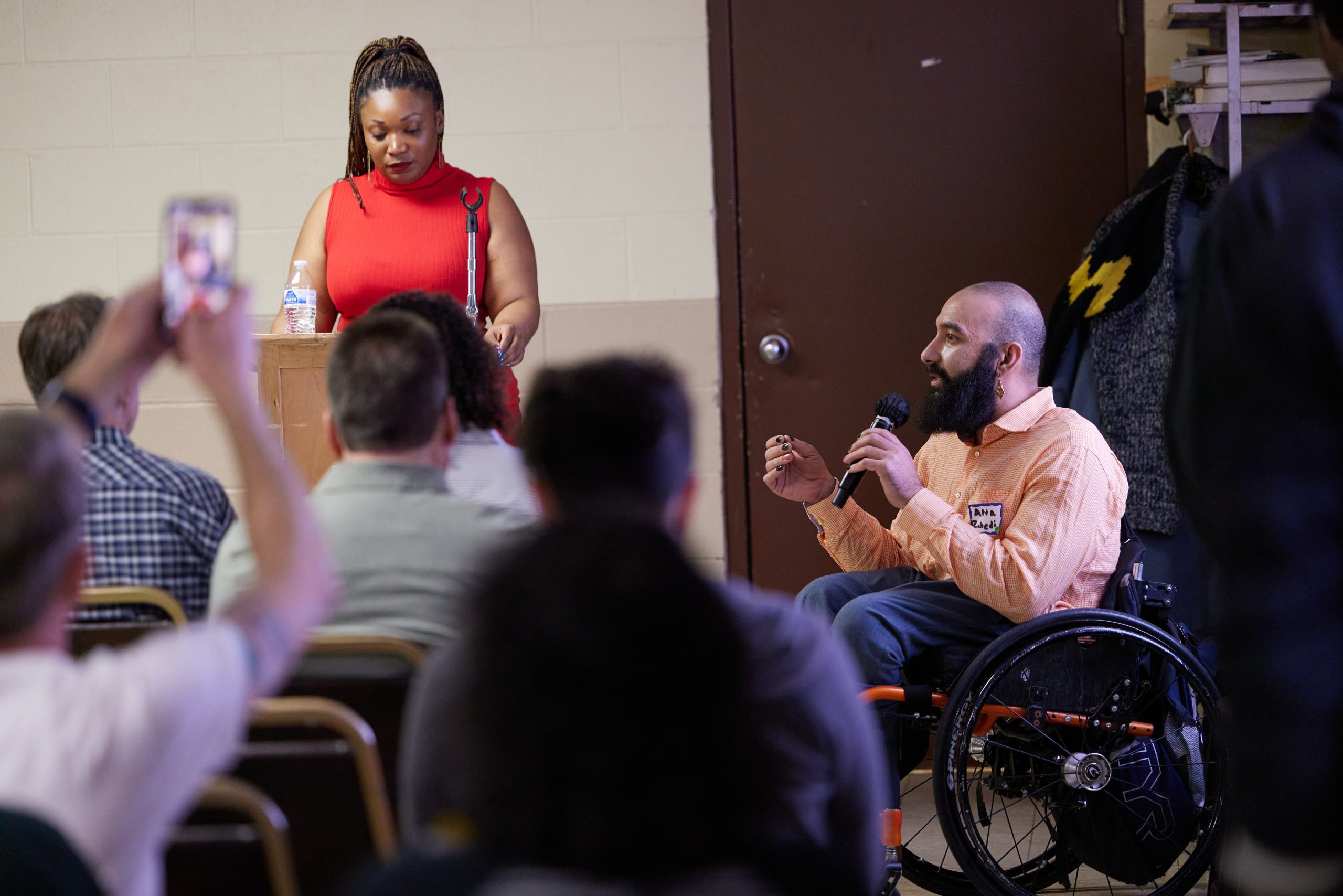
Photo above shows one of the community meetings where Wheeling residents provided their input on the plan. 


Save on MB Financial Bank Bike the Drive!

Whether you’re a MB Financial Bank Bike the Drive newbie or a seasoned veteran of this iconic ride, there is no better time than now to sign up and get early bird discounts.

Stop by any MB Bank location for a $2 discount code and also get a free Camelback water bottle. Sign up online by February 1 to get another $8 off!

Experience great views of the lake, the city’s stellar skyline and the joy of cycling car-free on Lake Shore Drive! No matter what kind of bike you ride or how fast you go, MB Financial Bank Bike the Drive is a blast!

Winter Bike to Work Day returns Jan. 18

Stop by Daley Plaza in Chicago’s Loop on Jan. 18 for the annual celebration of cyclists who don’t let low temperatures stop them from pedaling to work.

Warm up with free Caribou coffee, tea, and hot chocolate, as well as free slices of Eli’s Cheesecake from 6:30 a.m. to 9 a.m. at Daley Plaza, located at Washington Street and Dearborn Street.

Winter Bike to Work Day has long been celebrated alongside city hall and the Picasso sculpture. This year the location offers a special attraction—the newly-unveiled Dearborn Street protected bike lane runs on the east side of the plaza. If you have not yet biked on the Loop’s first protected bike lane (which includes the first bike-specific traffic lights in the region), Winter Bike to Work Day provides the perfect opportunity to try it out!

Rally attendees will receive free fleece balaclavas courtesy of The Chainlink and Bike Winter. There will be a raffle for several great prizes, which include a case of Clif Bars and a free registration to MB Financial Bank Bike the Drive.

Jan. 18 also marks the opening of registration for MB Financial Bank Bike the Drive. Get a jump on your summer by signing up for this world-class bike ride to be held on May 26.

Winter Bike to Work Day, organized by the Active Transportation Alliance, commemorates the coldest day in Chicago history—Jan. 20, 1985—when the official temperature at O’Hare International Airport was 27 degrees below zero.

How DC made bike sharing happen

This spring, Chicago will launch one of the few large bike-sharing programs in the nation. The city hopes to repeat the success Washington, D.C. has had, following European cities such as Copenhagen and Paris.

Riders can rent a bicycle for short trips around the city, from docks located at CTA and Metra stations, commercial and employment centers, and cultural attractions. Charging a credit card allows someone to unlock a bike from a dock for a short trip, and return it near their destination.

The city will use solar-powered docks, which can be quickly installed. It will launch the program with an initial fleet of 3,000 bikes at 300 stations, growing to 4,000 bikes at 400 stations throughout the year. This past fall, residents had the opportunity to suggest where the bike-sharing kiosks would be located in Chicago. 

A recent Slate article by Tom Vanderbilt credits Gabe Klein with making DC’s program a success. Klein is now heading the Chicago Department of Transportation, bringing some of the lessons of bike sharing with him. For those who are interested in the nuts and bolts of a successful bike-sharing program and how it took shape in DC, Vanderbilt’s article is well worth your time.

As Chicago gets closer to launching its program, keep an eye on the Active Trans bike-sharing webpages for more information.

Schaumburg keeps the momentum going

Schaumburg stands as a model for other suburban communities when it comes to biking. Along with being the first community in Illinois to be recognized by the League of American Bicyclists as a Bicycle Friendly Community and the first community in Illinois to require bicycle parking at many of its new developments, the village now has 90 miles of bike paths and 1,000 bike parking racks and locker spaces.

Schaumburg’s bike-related accomplishments didn’t slow a bit in 2012. Take a look at some of the past year’s highlights:

  • Installing a village-wide bike signage system indicating directions, distances and destinations.
  • Installing 168 new bike parking spaces at destinations throughout the village.
  • Repealing an existing ordinance that required cyclists to use off-road paths when they are available. (Since Schaumburg offers an extensive array of safe cycling facilities, many cyclists prefer or need to use on-road facilities).
  • Reintroducing the village’s Summer Bike Patrol program.
  • New bike path projects, including the construction of a new segment of bike path along Irving Park Road giving cyclists another route to a Metra Station and the expansion of the Atcher Park multi-use path to 10 feet.

Hooray for Schaumburg! We look forward to seeing more exciting developments in 2013.

Read more about Schaumburg’s innovative bike program and its recent accomplishments in sustainable transportation.

More bike corrals coming to Chicago

Great news for people who bike in Chicago: The city’s department of transportation wants to work with local businesses and business organizations to bring on-street bike parking corrals to neighborhoods throughout the city. 

Why build bike corrals? Bike corrals make it more convenient and inviting for people to ride a bike to a business. They provide parking for 10 or more bicycles in the same space typically occupied by a car.

Another benefit is that bike corrals remove bicycles from sidewalks, which makes it easier for pedestrians to get around. Bike corrals increase the visibility of bicycling as a transportation choice and show that a business community is bike friendly—that it cares about its customers who ride bicycles.

There are many reasons why a business would want to consider getting a bike corral installed, but the biggest benefit is economic.

More and more people are seeing that new bike infrastructure can be a boon for business. Bicyclists tend to visit local shops more often and spend more per month.

Currently, there are four bike corrals in Chicago, but there is a need for many more. Local businesses and business organizations can install an on-street bike corral for $2,500 to $3,000, plus some annual costs.

If you know of a business or a building interested in installing a bike corral, please contact tony@activetrans.org.


Recent comments

Copyright © 2013 Active Transportation Alliance | All Rights Reserved | Privacy policy