Active Transportation Alliance -- in partnership with the Regional Transportation Authority (RTA) -- is pleased to announce a new employer challenge at www.drivelesslivemore.com: The Earth Day Rideshare Challenge.
This challenge, which runs from April 8 to Earth Day on April 22, is free to your company and your staff. By participating, your employees will save gas money and reduce stress -- while helping your organization make a positive impact socially and environmentally.
There are many ways ridesharing can help you and your employees save:
Here’s how it works:
Get behind a team leader at your company and sign up for the Earth Day Rideshare Challenge today!
Last night CTA heald a public hearing explaining the proposed fare policy for the new Ventra system. Here are the comments Riders for Better Transit made to the CTA board:
We believe, on behalf of the riders we represent, that the proposed Ventra policy offers great convenience to CTA riders by allowing us the option of using credit cards or a Ventra card. This will make it easier for occasional riders and tourists to navigate our system and offer similar conveniences to regular CTA users that the Chicago Card currently provides.
The largest convenience of a new fare collection system, however, will not be realized until CTA, Pace and Metra use the same system and transfers can be made easily across the entire Chicago region. We support anything that can be done to speed up the implementation of a truly universal fare system.
Additionally, we recognize that CTA has gone to great lengths to make Ventra as accessible as possible for unbanked riders by preserving the option of a single-use ticket and by making Ventra cards widely available. Our biggest concern is for any low income riders who may struggle to meet the initial $5 cost of purchasing a reusable Ventra card. For those who may struggle to make that up-front cost, purchasing a single use card for $3 subjects them unjustly to a higher fare.
We encourage the CTA to be transparent about the impact they expect the single ride fare to have on unbanked and low income populations. We also encourage the CTA to work to accommodate low income populations who will struggle with this up front cost. For example, the Chicago Card policy is that the card is free for first time users but a $5 replacement fee is charged for subsequent cards. Perhaps lower income riders can be accommodated through a similar enrollment or card give-away program.
Active Transportation Alliance would be happy to help make sure the new Ventra cards get into the hands of this vulnerable population.
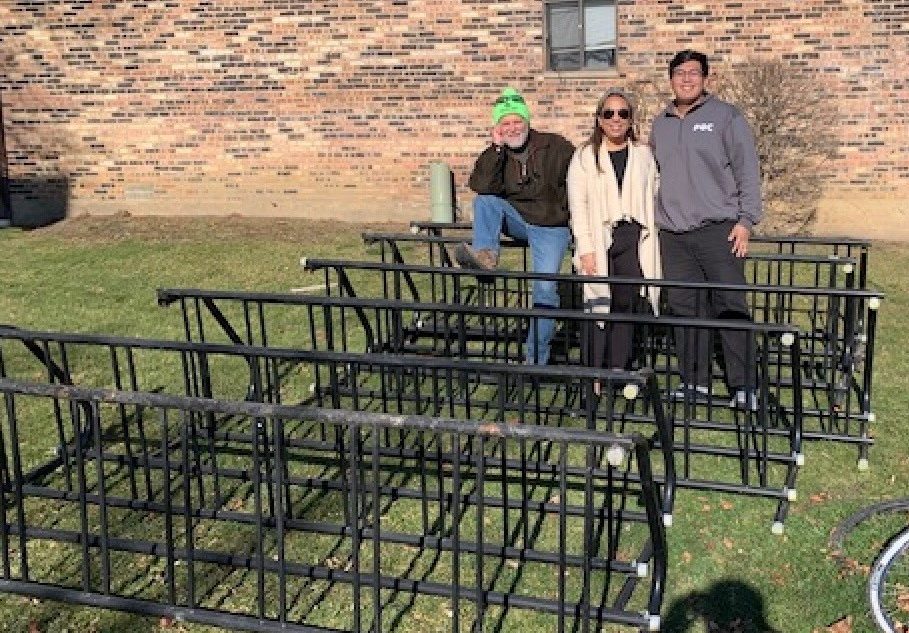
Saris Cycle Racks is hosting a photo contest for a new bike corral for your community! Saris will give one bike corral to the entry that shows the greatest need, most compelling location and strong public support of a bike corral.

Simply submit a photo of where you would like to see the corral and include a brief description of why you would like to see it in that location.
Entries with public support are more likely to make it to the final round.
Entries must be submitted by March 29.
Bike lanes are a great way to provide safe space for biking on a street, and they've worked well at helping more people feel comfortable riding on Chicago's often busy streets. But many of us have experienced the fear and frustration caused by cars parking in the bike lane.
When the bike lane is blocked, you can be forced to squeeze into faster-moving car traffic, which is not always the safest situation. Parking in the bike lane is illegal for good reason, but not everyone driving understands the law or why parking in the bike lane can put others at risk.
So if you notice a problem with parking in the bike lane and want to do something about it, what can you do? First, you can politely talk to the driver if he or she is in or near the car to let them know there's a bike lane on the street and ask if they're willing to move to keep the street safer. Many people will politely move their car, and they may not have realized what they were doing. But since it's not always that simple, here are some other tips for dealing with vehicles parking in a bike lane in Chicago:
(Photo credit Steven Vance via Flickr)
We were so busy preparing for last week’s Transit Summit that we didn’t get a chance to share with you CDOT’s recently-unveiled designs for central Loop BRT and the Union Station Transit Center!
Riders for Better Transit has closely followed this project as part of our effort to bring Bus Rapid Transit (BRT) to Chicago. The project includes plans to provide an east-west BRT route through the loop, connecting Union Station and Ogilvie Station with destinations such as Navy Pier. It also includes plans for the Union Station Transit Center, the new off-street transportation center just south of Union Station, which will provide key connections with other modes of transport to the BRT system.
Check out these renderings of the eastbound Washington Ave. and westbound Madison Ave. routes. Notice they include dedicated lanes for the bus and for bikes, as well as a station where riders waiting for the bus can stand.
Ron Burke, executive director of Active Trans, voiced our support by saying, "By making the cross-Loop trip fast and reliable, transit becomes an even better option for Chicagoans traveling through downtown. BRT is an incredible opportunity to provide the kind of transportation options that Chicagoans need.”
The Metropolitan Planning Council, which we have partnered with on our outreach efforts for Bus Rapid Transit in Chicago, expressed support for this project in this op-ed that appeared in Crain’s Chicago Business.
This is an exciting announcement for BRT in Chicago! Next in the works is the plan for Bus Rapid Transit on the Western/Ashland corridor. We’re still awaiting the announcement of a locally preferred alternative, which should happen this spring! Sign on here to show your support for BRT on Western and Ashland Ave.!
Chicago will soon decide whether to install protected bike lanes on Milwaukee Ave. this spring between Elston and Kinzie, as the first stretch of safety improvements that will eventually extend all the way to Devon.
By creating more order on an often chaotic and hazardous street, protected bike lanes would make Milwaukee Ave. safer for everyone, whether you are walking, biking or driving.
Consolidating some parking may be required to create a safer street, and that's worth it. Unfortunately, barrier-protected bike lanes could be left out of improvement plans as the city assesses how to use limited street space. Please sign the petition telling Chicago city officials to install barrier-protected bike lanes on Milwaukee Ave.
TAKE ACTION TODAY!
Click here to sign the petition supporting protected bike lanes on Milwaukee Ave.
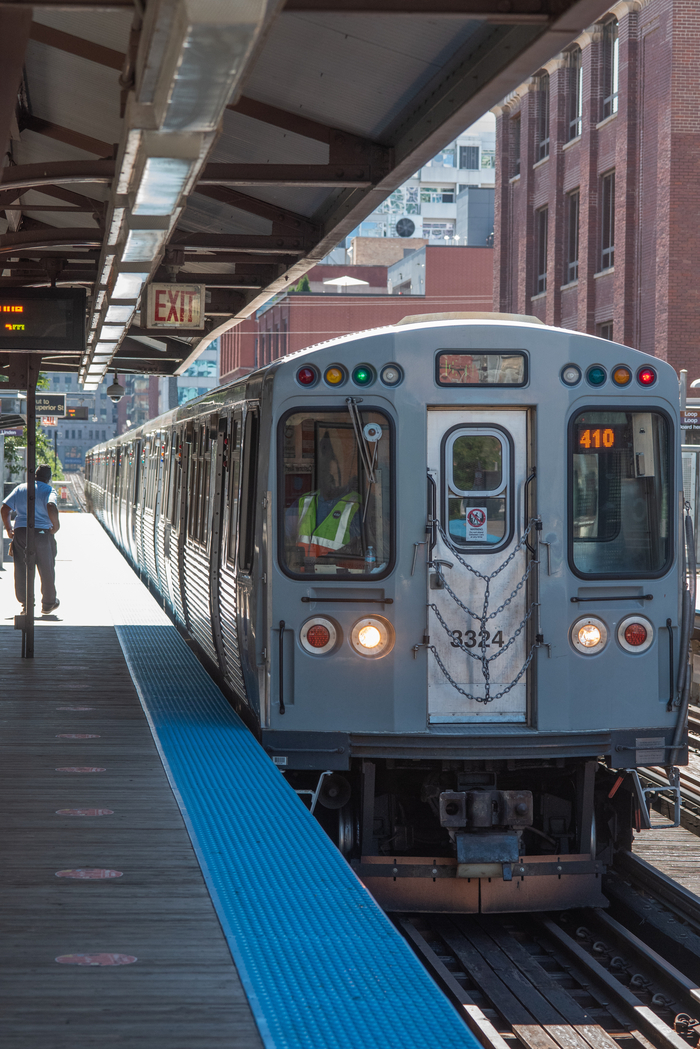
Metra CEO Alex Clifford did his cash-strapped agency no favors Wednesday at his City Club presentation by asserting that Metra's largest fare increase ever (25 percent) didn't contribute to a 1.7 percent ridership decline in 2012.
Clifford rightfully made the case for more capital dollars to close a huge funding deficit for maintenance and repairs, but then gave politicians a convenient out by saying Metra riders, and would-be riders, aren't dissuaded by fare increases. If that's true, then elected leaders who control the purse strings might simply tell Metra to keep raising fares to close its funding gaps. If riders don't care about fare increases, why should politicians?
But riders do care, and you can be sure that a modest percentage of riders dumped Metra while fewer new riders took to the rails because of higher fares.
Clifford's claims are also inconsistent with Metra's new promotion to attract riders with, you guessed it, free rides! If fare prices don't matter, why give away rides?
It's true that Metra is still a great value for its typical commuters, but only 12 percent of suburbanites can get to a typical job in less than 90 minutes on transit. And even those fortunate few won't find Metra a good value if fares keep going up and up.
With suburban transit cash strapped and not especially convenient for nearly 90 percent of its potential customers' commutes, Metra should be lamenting the need for large fare increases, not excusing it.
Thanks to all of you who joined us on Monday for the Riders for Better Transit Summit: Building a 21st Century Transit System. The event was a huge success! We had over 120 attendees, including elected officials, local transit agencies, transportation professionals and, of course, our members!
In case you missed it, the event featured 11 great presenters who spoke about why transit is important, the kind of difficulties it’s facing in our region today and how we can look at transit governance and transit funding for solutions to move transit forward.
Carol Coletta, urban policy expert and commentator, started the event off with an important question: What kind of transit will we leave to our children? Active Trans Executive Director Ron Burke also helped set the stage for discussion by laying out some of the problems that transit in our region is facing, and Scott Bernstein of the Center for Neighborhood Technology gave us a vision for the future of transit in our region.
The event featured two panels, one on transportation governance and one on transportation funding. Steve Schlickman, executive director of UIC’s Urban Transportation Center facilitated the panel on transit governance where John Gates, board chairman of the RTA, Frank Beal of Metropolis Strategies and Dan Cronin, chairman of DuPage County, weighed in on the strengths and weaknesses of the RTA.
The topic is a timely one since Metropolis Strategies has announced their support for state legislation that would drastically change the RTA by combining its functions with the Chicago Metropolitan Agency for Planning. The panelists discussed this option as well as what responsibilities the RTA has to growing suburban areas like DuPage County, which contributes significantly to the funding for our system and is interested in more transit.
In our second panel, Jacky Grimshaw, also of CNT, lead a discussion about where we can look for new sources of funding for transit. With many transit agencies facing a shortage of funds, and less and less help coming from the federal government for new transit projects, it’s clear that transit in the Chicago region needs new investment.
Randy Blankenhorn of CMAP, Peter Skosey from MPC and Transportation for America’s Georgia Gann shared new ideas about where to look for this much needed revenue. Some of the ideas included revisiting the current gas tax and exploring congestion mitigation pricing, as well as ideas like expanding the sales tax base to services.
Thank you to all of our speakers for sharing your expertise with us! And thank those of you who attended for your positive feedback. Check out what others are saying about the event in this story on DNAinfo.com.
Interested in some of the information presented at the summit? The slides from the event can be found here.
Spring officially begins on March 20 this year, just five weeks away. As Chicagoans know, construction crews return to the streets when spring arrives. We're excited about that because it means the city will get back to work installing new bikeways, making our streets safer for everyone.
What can we look forward to this spring? The city's Streets for Cycling Plan 2020 (PDF) calls for more than 16 miles of new bikeways by May 2013!
The plan is a roadmap to guide the development of a citywide network of bikeways, but the inclusion of a street in the plan does not mean that a bikeway project has been approved by the alderman or necessary government agencies.
Making the plan a reality will still require advocacy and outreach to keep bikeway projects moving forward -- and we're depending on supporters like you to speak up with us. With the state putting down roadblocks for projects like these, you can help right now by telling Gov. Quinn to end the state's obstruction of safer streets for biking.
We've updated our Chicago Bikeways Tracker map so you can see what projects from the plan have been completed and what's proposed for installation by May. Here are a few highlights.
To learn more about ways you can help support these projects this spring, make sure to sign up as a Neighborhood Bikeways Campaign supporter here.
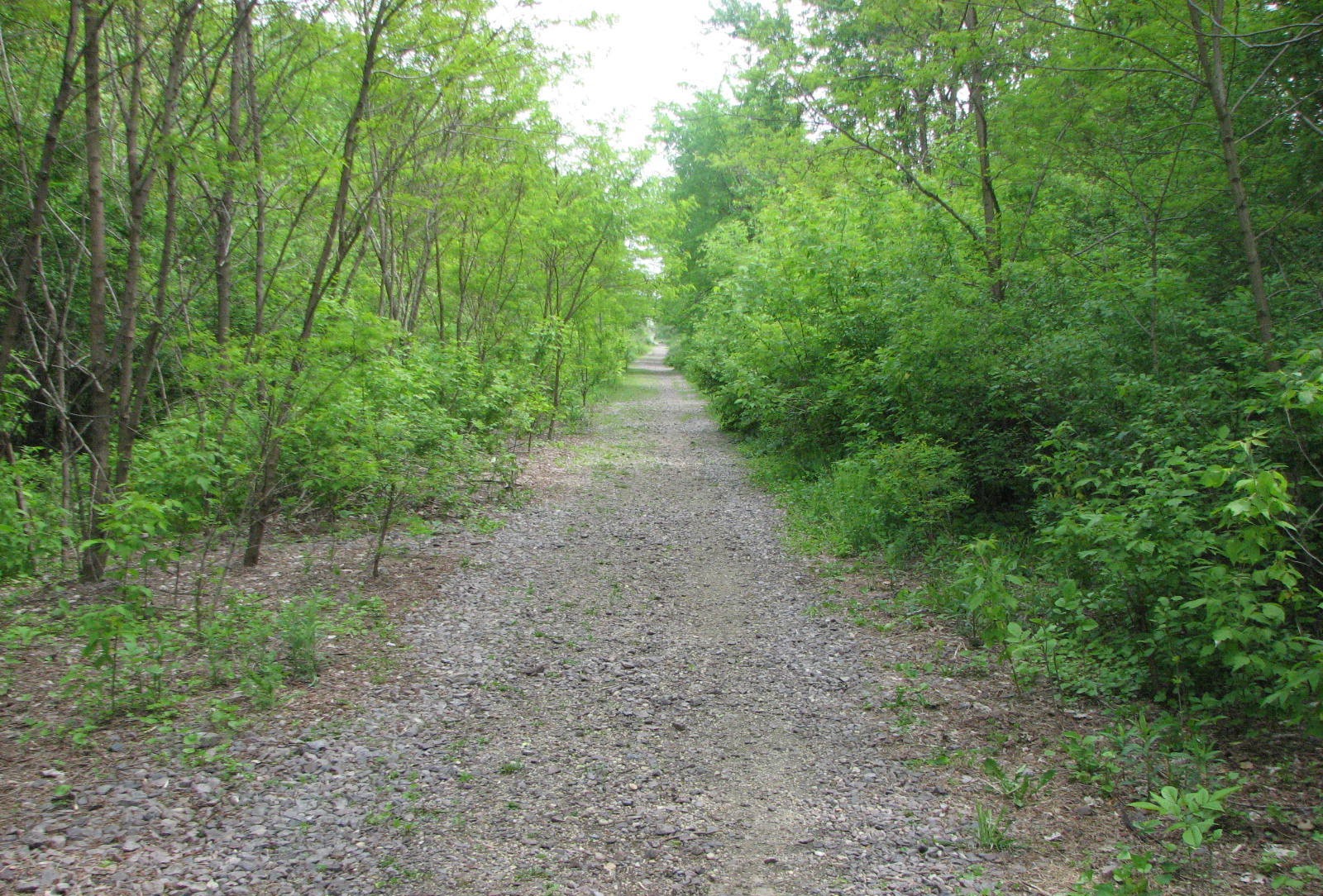
The Illinois Prairie Path lost a great advocate with the recent death of Jean Mooring at the age of 86. Jean, along with her husband Paul, were unstoppable in their long-term commitment to getting the nation’s first successful rail trail off the ground.
This year, the Illinois Prairie Path is celebrating its 50th anniversary. Jean Mooring worked as a volunteer on the West Suburban path for 48 of those years. She was the editor of the Illinois Prairie Path not-for-profit group’s newsletter for 16 years and served on the group’s board of directors for 32 years, a role the long-time Glen Ellyn resident continued until her death.
In 1988, Prairie Path volunteers received a national Take Pride in America Award. At a White House ceremony, the Moorings accepted the award on behalf of all the path’s volunteers.
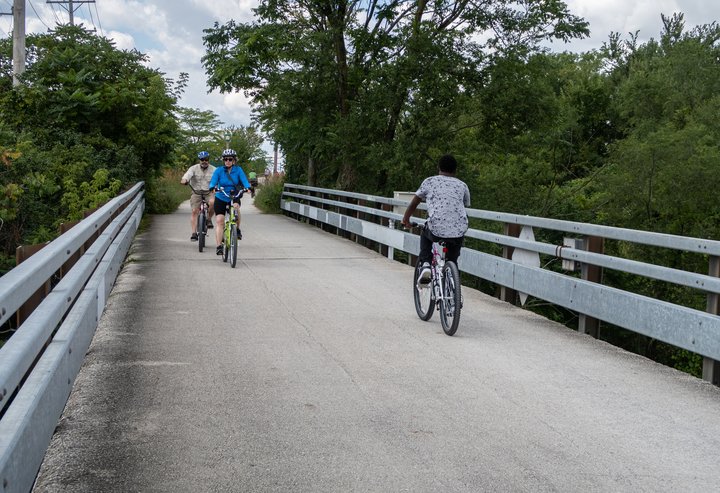
While Jean Mooring’s mobility was limited in recent years, she still enjoyed getting out on the path so she could marvel at the many people enjoying the fruits of her labor. She loved to see people biking, walking and running along the scenic 62-mile trail.
The Rails-to-Trails Conservancy's magazine recently published a feature article (PDF) to honor the 50th anniversary of the Prairie Path and the long-term dedication of the Moorings and another married couple who volunteered on the path for many years. Even though setbacks and challenges were not uncommon during her many years of volunteering, Jean Mooring said in the article:
“You will always find more joy than adversity” in a trail-building project such as this, “and you have the satisfaction of improving people’s lives.”
Copyright © 2013 Active Transportation Alliance | All Rights Reserved | Privacy policy
Recent comments
1 day 21 hours ago
4 days 8 hours ago
4 days 12 hours ago
5 days 12 hours ago
5 days 15 hours ago
5 days 17 hours ago
1 week 9 hours ago
1 week 13 hours ago
1 week 16 hours ago
1 week 1 day ago