Enough is enough: Stop the transit cuts!

We are holding our breath waiting for the CTA to announce its 2013 budget. Are more service cuts or fare increases coming our way? 

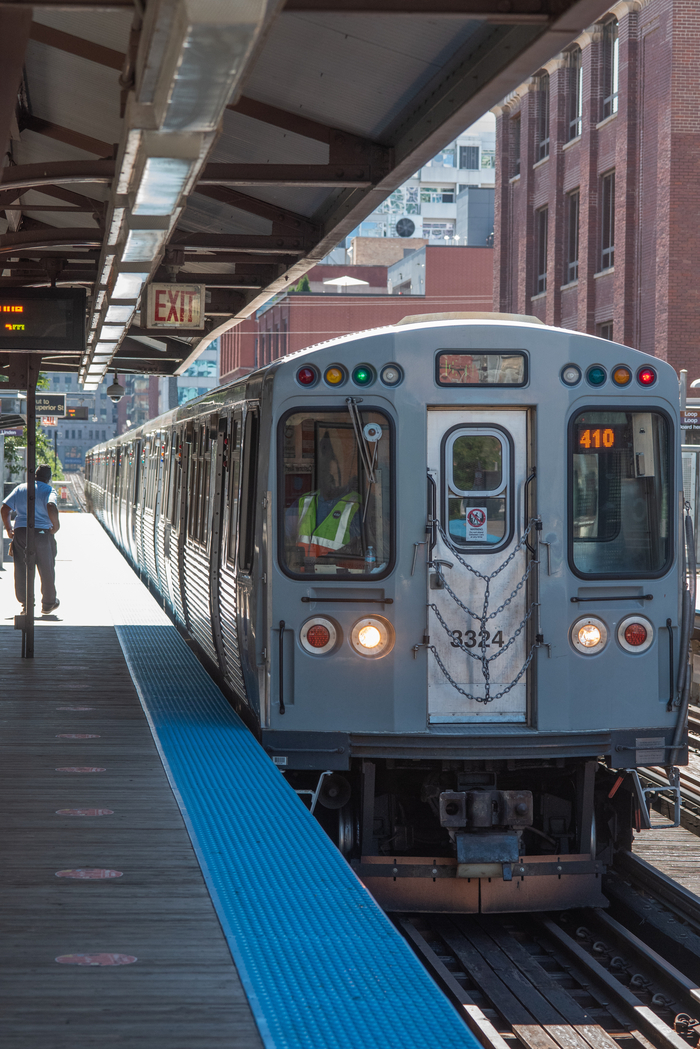
 The CTA recently decided to cut a number of routes because it was the only way it could afford to add service on overcrowded buses and trains. In 2010, CTA cut bus service 18 percent and train service 9 percent. CTA train fares have increased 80 percent since 1990 – but in that same time the state gas tax hasn’t increased one penny.

Metra has already announced a 2013 budget that leaves more fare increases on the table for next year. Metra just raised fares 25-30 percent earlier this year.

Every year it seems transit riders in Chicagoland get less transit service for our money. Service cuts and fare increases have become a regular tradition, making it more difficult and more expensive to get around. Transit in our region needs to stop moving backwards. Tell your elected leaders it’s time to stop the cuts and invest in moving transit forward!

TAKE ACTION: Tell your elected leaders to stop the transit cuts!


Autumn brings more new bikeways all over Chicago

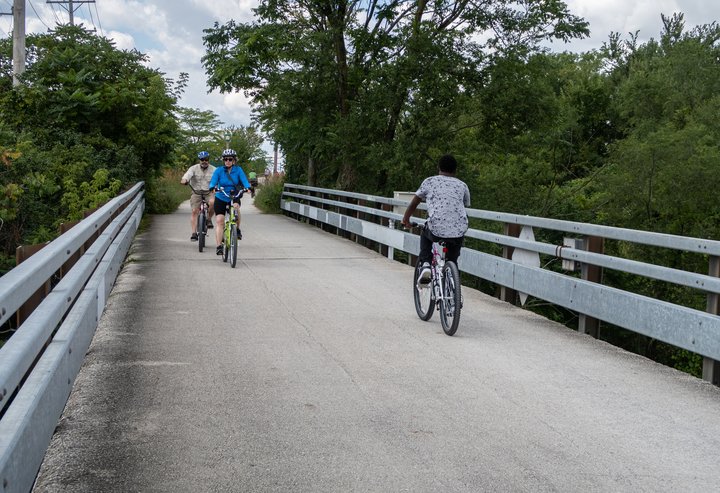
Hold on to your handlebars! City construction crews are rolling out miles of exciting new protected and buffered bike lanes right now, making it safer and easier than ever to bike in Chicago. And we still expect additional projects will start before the 2012 construction season ends, so stay tuned for more updates!

In just the past week, two exciting new bikeway projects have started construction:

31st St. protected bike lane connects to the lakefront
The City has started striping a new protected bike lane on 31st Street that will stretch 1.5 miles from the Lakefront Trail to Wells Street. When completed, this bikeway will provide a safe route connecting Bridgeport, Bronzeville and the 31st Street beach and harbor.

Better bikeways coming to West Side boulevards
A new bikeway is now rolling out along the boulevard system and connecting neighborhoods on the West Side, from Garfield Park to Douglas Park and extending south along the boulevards. This safer bikeway includes 2 miles of protected bike lanes and 1.5 miles of buffered bike lanes.

Check out a map of Chicago's newest bikeways and follow our progress toward 100 miles of protected bike lanes on our Chicago Bikeways Tracker.

Open house! Metra shares its strategic plan and talks about next year's budget

Over the summer, Metra invited riders to review its strategic plan at a series of open houses. Riders for Better Transit attended and provided feedback about the plan on behalf of our suburban members. Thank you to those of you who attended a meeting in your area and shared your own input on the plans as well.

Metra has taken the input it received from these open houses and made further adjustments to its goals and objectives, capital funding priorities and even its mission statement. They are now ready to update riders with these changes at a new round of public meetings! Find dates/times and the location nearest to you.

In most cases, these strategic planning open houses will also serve as public hearings for Metra’s 2013 budget, which was recently released. Thankfully, this year’s budget does not call for any service cuts or fare increases at this time. But it does paint a rather unhappy picture of Metra’s finances in the coming years. Particularly vulnerable, according to the budget, is Metra’s Capital Investment Program--the money needed for making long term investment in the structural aspects of the system. Metra’s budget makes it clear that if it cannot get the funding it needs from the state of Illinois, federal transportation funds and other expected sources, they may yet be forced to consider raising fares.

Active Trans plans to make comments about both the strategic plan and the budget at these upcoming meetings--and continuing our push for better transit, without fare increases or service cuts. We’ll encourage Metra to make decisions that put the riders first. Join us!

High-speed rail on the fast track in Illinois

On Monday U.S. Transportation Secretary Ray LaHood's Fast Lane blog featured the new high-speed rail route from Chicago to St. Louis. Below is an excerpt from Sec. LaHood's post:

"Last Friday morning in Joliet, Illinois, I did what a lot more Illinoisans and Missourians have been doing lately--I boarded an Amtrak train. Friday's ride, however, was special because somewhere between Joliet and Normal, after decades of passenger trains on this route topping out at 79 miles per hour, our train hit a speed of 111.

"That new high speed is an impressive 39 percent faster than the one passengers have been living with for years. So Friday was an exciting day for us, and as passengers in the coming weeks experience speeds of 110 MPH between Dwight and Pontiac, Illinois, it’s proof that 21st century rail is indeed coming to America."

Read the entire article here!

In the blood: Heroics, doping, and new hope for bike racing

Throughout my life, I have found a great deal of enjoyment on a bicycle; as a child careening about on a Huffy with a coaster brake; as a teenager bombing down mountain trails in Alabama; in my early 20s as a bike commuter and endurance rider. In all its variations, the feeling of riding a bike is inimitable. The bicycle, with its mechanical advantage, allows us as humans to surpass our natural capabilities for speed and distance. It seems only natural that the Wright Brothers fostered an enthusiasm for cycles and bike parts via their bike shop. It’s the perfect half-step between walking and full flight.

The natural high of riding a bike was eventually replaced by a runner’s high. Post-college, I found myself entering 5K runs, and later half-marathons, as I discovered my love for endurance sports and nurtured my competitive side. I capped this off with an Olympic-distance triathlon before realizing, once again, that the bike was where I needed to be. Except this time, I wanted to race them.

I dove headfirst into road cycling in early 2011 when I joined a local bike club, began riding longer distances with faster people, and got completely swept up in the Tour de France. I’d never felt anything like the passion that I discovered in the culture, camaraderie, traditions, and sport of cycling. That summer, I discovered a cycling hero in Thomas Voeckler, a Frenchman who would hold the coveted leader’s jersey for several stages of the Tour, seemingly racing beyond his physical limits as he attacked the grueling climbs of the Alps. Astonished at his capabilities (compared to the Tour favorites), I had no reason to believe that Voeckler or any of these riders I saw on TV were involved with blood doping. This, of course, was the Tour, post-Lance Armstrong.  I mean, we were past all that, right?

I had been a huge fan of Lance, as many were and still are. Despite the allegations that he’d used performance-enhancing drugs, his seemingly infinite endurance and will to succeed were an inspiration in my days as a competitive athlete. In sharing this inspiration with fellow cyclists, I was faced with the countless dismissals: “That dude is using drugs. You know that, right?” For years, my reaction was stubborn: I didn’t understand blood doping and I didn’t want to. But more than anything, I had a hero, and I needed to keep him heroic.

But every time someone accused him, I started to see cracks in the hero myth. I didn’t want to. I trusted in Lance’s superhuman genetics and cardiovascular system, his comeback story. (I believed just as strongly in my new heroes like Voeckler—after I lost faith in Lance.) I was torn between my will to believe in something great and the inevitable bite of losing my hopeful naïveté.

As I eventually found my way into the delightful world of amateur racing, it became hard to stay that way. In my final moment of defending Lance, a fellow rider explained “Look, it’s not just him. It’s everyone. It’s just how the pros do it.”

Among bike racers, it’s understood: If you want to succeed as a WorldTour pro—the highest level of bicycle road racing, featuring the longest and hardest races known to man—you have to augment your body’s capabilities. Not because these guys can’t complete the races without drugs, but because they’re racing at the very highest level, where there’s no room for error. The tiniest increases in efficiency are sought fanatically, both in the riders and in the machines they ride.

Among a peloton of the world’s fittest athletes, the incremental performance boost from doping is enough to annihilate the competition. Period. One guy does it and then everyone has to, just to keep things competitive. I was disappointed, and thoroughly so, to hear about this. But then it became the reality of pro cycling to me, and I learned to accept it as a bitter, pragmatic truth.

As Armstrong’s former teammate, George Hincapie, put it, "Given the widespread use of performance-enhancing drugs by cyclists at the top of the profession, it was not possible to compete without them." I think the important word here is “compete.” Strong, successful racers were suddenly finding they could no longer keep up with their rivals. They were faced with the decision to start doping or lose, and they doped to level the playing field. (Well, not everyone. Read about one former pro who refused to follow the trend.)

As the revelations of doping in cycling continue to make news, what’s become clear to me is the pervasive presence of disappointment, not only for fans and amateur racers, but for the pro riders themselves. As riders issue apologies, accept punishments, and explain their regrets, you can almost feel the collective sigh of catharsis.  

As we take a deep breath and look ahead, my hope is this: With this fresh and startling level of truth-seeking comes a healing process that follows up “the doping years” with a new era of heroes. An era where today’s junior racers might find their way to the highest level of the sport and have the opportunity to race “clean,” with no pressure to do otherwise. An era in which the inspirational elements of cycling—the personalities and legends and superhuman feats—might one day be something else: Just human.

Simply, wonderfully human.

Afterword: Following the submission of this post, I read this article, written by someone with significantly more first-hand experience than myself. Pro cycling may be closer to reaching a new level of honesty than I thought. 

Lakefront Trail Activities October 19-21

Permitted activities that may affect your use of the Lakefront Trail, October 19-21, 2012

Friday, October 19

No Permitted Activities Reported

Saturday, October 20

Light up the Night Walk, Grant Park, 4:30pm-8:30pm, Step off at 6:00pm

Step Out: Walk to Stop Diabetes, Grant Park to Soldier Field, Step off at 10:00am 
See Route Map (PDF) 

Making Strides Against Breast Cancer, Lincoln Park-Grove 16 (Berwyn to Montrose), 6:00am-2:00pm
See Route Map (PDF)

De La Salle Cross Country Invitational, Burnham Park 41st to 46th St, East of LFT, No specific time given 

Sunday, October 21

2012 Chicago Monster Dash, Grant Park to 51st Street, Step off at 9:00am
See Route Map (PDF)

Chicago Get Your Rear in Gear 5K, Lincoln Park-Grove 16, 8:00am-11:00am
See Route Map (PDF) (looks like the LFT will only be used from Foster to Catalpa)

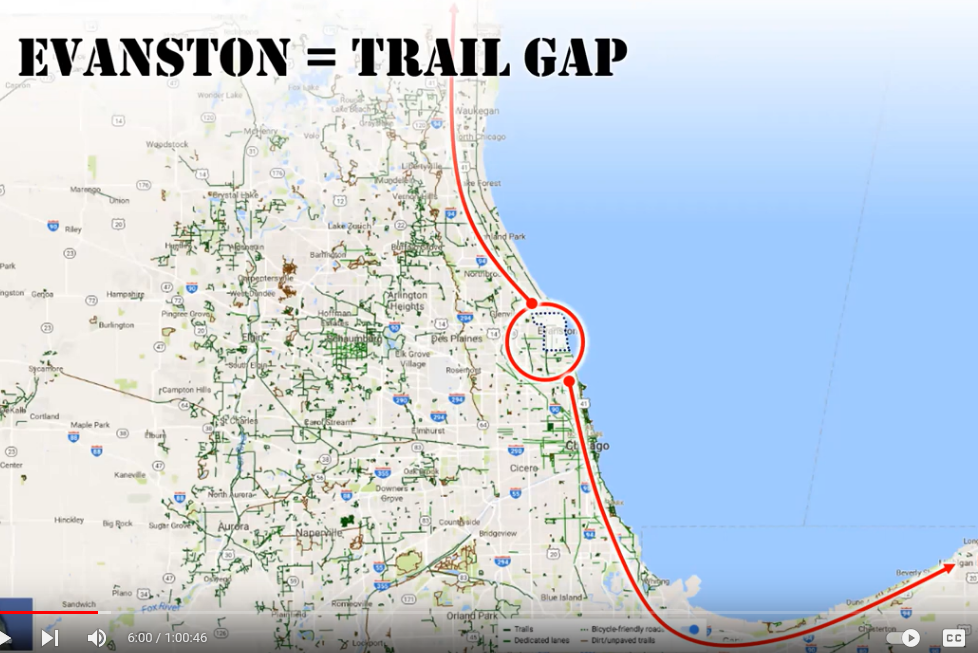
Evanston achieves official status as Bicycle Friendly Community

Thanks to the efforts of many officials and residents, Evanston has been designated a Bicycle Friendly Community (Silver Level) by the League of American Bicyclists. Mayor Elizabeth Tisdahl, the city aldermen, Director of Public Works Suzette Robinson and her engineering team, the city sustainability and planning staff, and Evanston biking advocates all played a part in achieving this impressive distinction.

The Bicycle Friendly Community (BFC) program recognizes communities that prioritize quality of life, sustainability and transportation needs. Municipalities with the BFC designation are known to be great places to bike, live, work and visit. The League of American Bicyclists has awarded three U.S. cities its Platinum level designation, 17 cities Gold level, and now Evanston joins a group of 47 communities around the country with Silver level BFC status.

The League has noted the following aspects of Evanston’s efforts to build a world-class bicycle friendly community:

"From Evanston’s bicycle commuters who ride to save on automobile and fuel expenses, the recreational bicyclist who enjoys viewing the neighborhoods and scenery, to the environmentally conscious rider who wishes to ease urban congestion and combat climate change, Evanston is a bike city at heart.

"Evanston has invested in signage, bike lanes, trails through parks, bike parking and linkage of trails with surrounding communities to make the streets accessible and safe for all types of cyclists. Evanston also employs road diets and area wide traffic calming to make the roads safer for all users.

"Evanston is also known for its ongoing community engagement and understanding of the needs and desires of the community as they evolve. Evanston city staff designed and constructed a protected bike lane after hearing that more residents want to enjoy their community by bike but are still hesitant to ride in the street next to moving vehicle traffic."

Congrats to the Evanston Environment Board, Citizen's Greener Evanston's Transportation Task Force, School District 65 Ad-Hoc Green Committee, Walk N Roll Evanston, the Evanston Bicycle Club and the Ten27 Bicycle Shop.

The Bicycle Friendly Community Award will be presented to the Evanston City Council on Monday, October 22 at 7:00 p.m.

Community remembers vibrant life cut short in hit-and-run tragedy

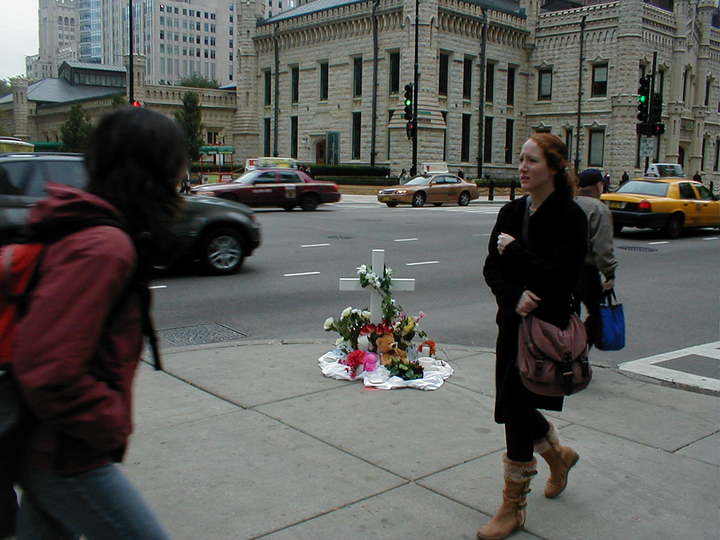
Last Sunday night, friends and family of Martha Gonzalez gathered at Simone's bar in Pilsen to commemorate this Latina mother who was killed on October 3, 2009. Martha was struck by a car at the intersection of 18th and Halsted Streets while she was trying to cross the street. The driver of the vehicle fled the scene of the crash.

Martha's death was a wake-up call to make our streets safer so that a tragedy like this never has to happen again. Active Trans has been helping the Martha Gonzalez Memorial Committee make the 18th street/Halsted intersection safer for all who walk these streets by advocating for pedestrian amenities like "ladder-style" crosswalks and a change to the signal interval to allow more time to cross the street. 

The hit-and-run driver who killed Martha is still at large. If you have any information that could help find the person responsible for this tragedy, please contact Martha's family at 312-203-4986.

Univision covered the event. Watch the video here

Riders for Better Transit attends BRT public meeting

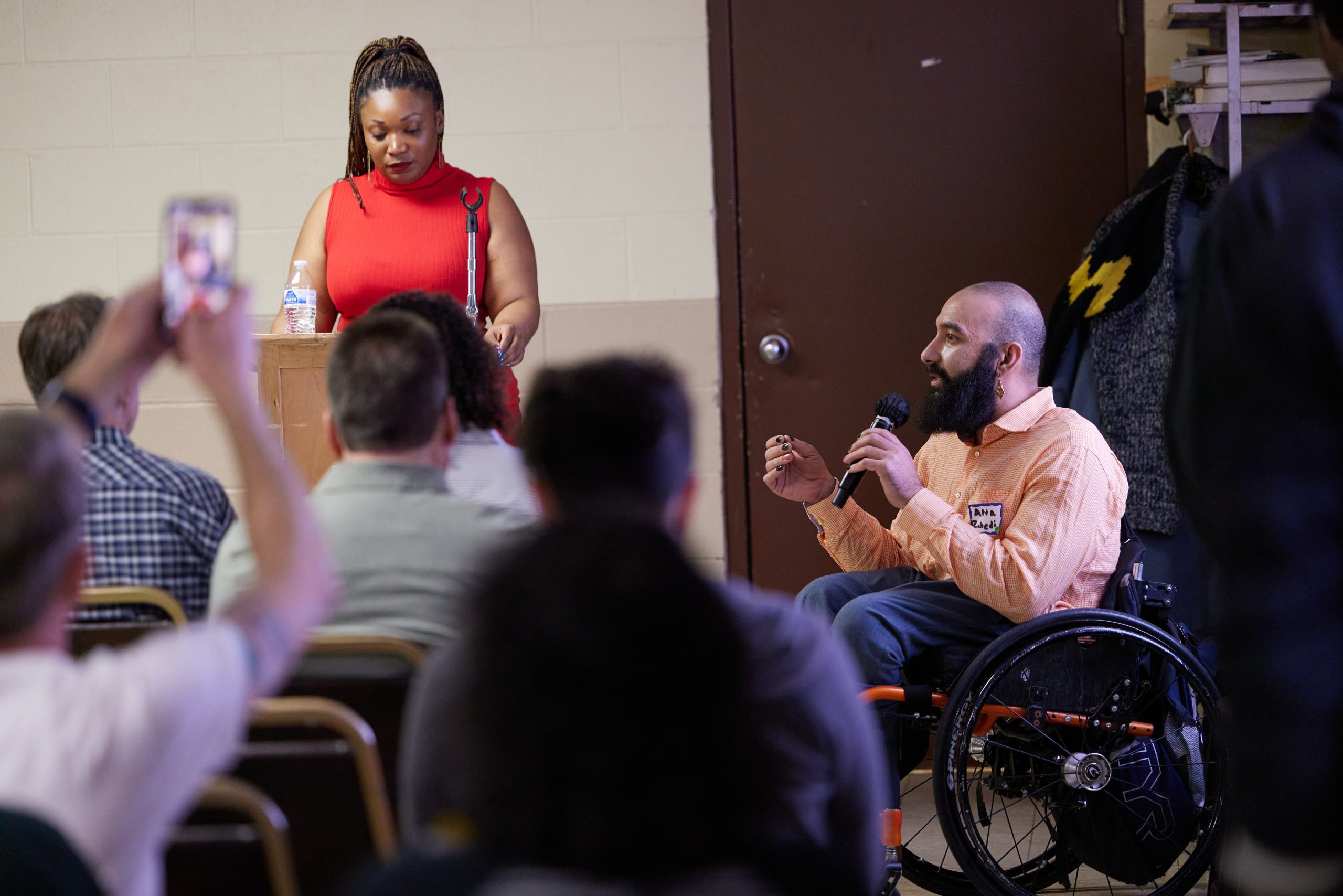
Last night Riders for Better Transit was on hand for the first public meeting about CTA plans for Bus Rapid Transit on Western and Ashland Avenues. An impressive number of community residents turned out to learn more about CTA proposals to bring better bus service to their neighborhood. 

Many attendess arrived at Iglesia Rebano Church even earlier than the scheduled 5:30 p.m. door opening to hear about the project. Before being shown the four alternatives the CTA has in mind for Western and Ashland, transit riders were able to view exhibit posters from the Chicago Architecture Foundation and talk to non-profit organizations that support the project, which included Riders for Better Transit. We gave attendes some background on the ideas behind the project and why we support bringing Bus Rapid Transit to Chicago, and we helped them navigate the abundance of information the public meeting contained—nearly 40 panel boards of statistics, maps and plan explanations.

Residents came with varying degrees of prior information about the topic. Some had been to earlier public meetings and were interested in seeing how the CTA had narrowed the options since June. Some were completely unfamiliar with the BRT project but saw a sign for the meeting on the bus and worried they might be losing service. Most seemed happy with the idea of improving bus service, and several submitted comments to the CTA about the alternatives.

We were happy to see a few Active Trans members (and Riders for Better Transit supporters) attend, several of whom asked important questions about how bicyclists would be accommodated in these plans. Cyc and encouraging the CTA to work with the Streets for Cycling Plan 2020.

Two more public meetings are scheduled for this week. Riders for Better Transit will be at all of them, and we hope to see many more transit riders, residents, business owners, and cyclists join us!

Help plan Chicago’s new bike share system!

The Chicago Department of Transportation (CDOT) plans to put 3,000 bikes into use in Chicago’s bike share network starting in spring 2013, with a goal of adding 1,000 more after the rollout. In preparation, it has launched its official bike share website. We encourage readers to visit the site and use the interactive map to show CDOT where you’d like to see bike share stations.

CDOT is also hosting a series of five public meetings (PDF) to discuss plans for the program, answer questions and get input. Public involvement is the key to success in launching a program like this, so we encourage our members to attend the public meetings and get involved. The meeting schedule is listed below:

Monday, October 29
11:30 a.m. – 1:00 p.m.
Chicago Architecture Foundation
224 S. Michigan Avenue

3:00 p.m. – 5:00 p.m.
Pop‐up meeting at Union Station

6:30 p.m. – 8:00 p.m.
Chicago Architecture Foundation
224 S. Michigan Avenue

Tuesday, October 30
6:30 p.m. ‐ 8:00 p.m.
Lincoln Belmont Public Library
1659 W. Melrose Street

Wednesday, November 7
6:30 p.m. ‐ 8:00 p.m.
Charles Hayes Center
4859 S. Wabash Avenue

For more general information about bike sharing, visit our bike share page

Updated Oct. 19: This post was revised to clarify that the city plans to reach its ultimate goal of 4,000 bikes in the system incrementally. 

Recent comments

Copyright © 2013 Active Transportation Alliance | All Rights Reserved | Privacy policy